How Much Is Your Company’s Data Worth? Protecting Your Most Valuable Business Asset
23 Jul 2026
TL;DR:
Business data has become a strategic asset that supports operations, customer relationships and long-term growth.
Effective data protection requires people, processes and technology working together.
IMDA and PDPC provide practical guidance to help organisations strengthen data protection and governance.
Employee awareness and accountability remain one of the strongest defences against everyday cyber risks.
Why Business Data Is More Valuable Than Ever
Customer records, employee information, financial data, supplier contracts and intellectual property are among an organisation’s most valuable business assets. As organisations accelerate digital transformation and adopt AI, the value of this information continues to increase.
Many businesses invest heavily in protecting physical assets but give less attention to the information that keeps operations running. Gartner continues to recognise data as a strategic asset that supports better decision-making, operational efficiency and innovation.
When business data is lost, compromised or unavailable, the impact extends beyond the IT department. Operations can be disrupted, customer confidence may decline and decision-making becomes more difficult. Protecting business data is therefore a business priority, not simply an IT responsibility.
What Data Does Your Organisation Actually Own?
Understanding what information your organisation holds is the first step towards protecting it. Customer information, financial records, employee data and intellectual property each carry different levels of value and risk. Identifying the most critical information helps organisations prioritise protection efforts and allocate resources effectively.
Examples include customer databases, payroll records, supplier contracts, board papers, product designs, operational manuals and AI knowledge assets.
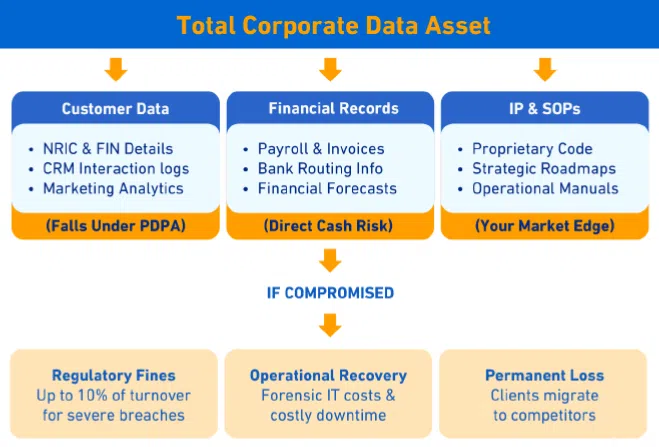
The types of information may differ from one organisation to another, but the need to protect them remains the same.
Ask yourself: If this information was lost or compromised, what would be the impact on your organisation?
The Hidden Business Cost of Losing Data
A data incident is rarely just a technical problem. It can lead to operational disruption, regulatory action, financial losses and reduced customer confidence. PDPC enforcement decisions continue to show that many incidents result from preventable issues such as weak access controls, phishing attacks and human error.
While systems can often be restored, rebuilding customer trust and recovering years of business knowledge usually takes much longer.
Why Technology Alone Isn't Enough
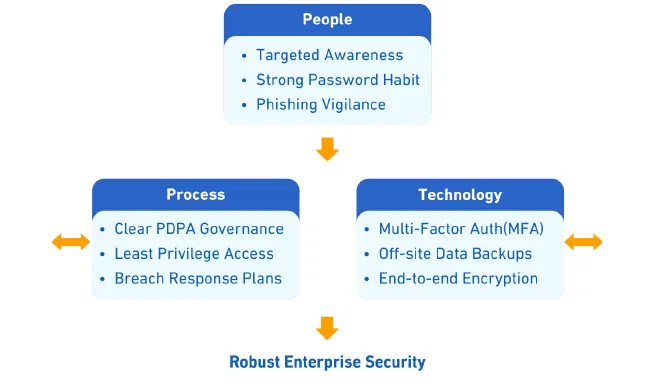
Technology plays an essential role in protecting information, but it is only one part of the solution. IMDA’s Data Protection Essentials encourages organisations, particularly SMEs, to begin with practical measures such as identifying the personal data they hold, limiting access to sensitive information, securing devices and improving employee awareness. Together, these measures strengthen governance, reduce everyday risks and provide a solid foundation for future cybersecurity improvements.
Five Questions Every Business Leader Should Ask
Do we know what personal and business data we collect, where it is stored and why we keep it?
Are access rights reviewed regularly?
Is someone clearly accountable for data protection and PDPA compliance?
Are 0employees equipped to recognise phishing attempts and handle information responsibly?
If a data incident occurred tomorrow, would we know what to do?
Getting Started
For organisations beginning their data protection journey, IMDA’s Data Protection Essentials and PDPC’s practical guidance provide a strong foundation before investing in more advanced cybersecurity capabilities
Building a Data-Conscious Workforce Starts with Every Employee
Technology alone cannot protect business data. Employees play a vital role in recognising risks, handling information responsibly and following organisational policies. PDPC encourages organisations to embed accountability across the business, while KPMG Singapore’s Read to Lead initiative with the National Library Board highlights the growing importance of critical thinking and information discernment in an AI-enabled workplace.
Recommended Learning Pathways
The following learning pathways help organisations strengthen practical data protection capabilities across different roles.
Learning Pathway | Best For | Outcome |
|---|---|---|
Data Protection & PDPA Compliance | HR, Operations, DPOs | Strengthen governance and PDPA compliance |
Cybersecurity Awareness & Safe Data Handling | All employees | Reduce human error |
Information Systems Security | Experienced IT & Security Professionals | Build expertise in security architecture, risk management and information security governance. |
Key Takeaways for Business Leaders
Recognise business data as a strategic asset.
Strengthen governance through people, processes and technology.
Assign clear accountability for protecting data.
Equip employees with the knowledge and confidence to handle data responsibly.
Review data protection practices regularly as your organisation adopts new technologies and AI.
Your Data Is Worth More Than You Think
Organisations that invest in governance, capable employees and appropriate technology are better positioned to protect their information, strengthen customer trust and build long-term business resilience.
Ready to Strengthen Your Organisation's Data Protection Capabilities?
Building a strong data protection culture starts with the right people, practical skills and a clear strategy. ITEL partners with organisations across Singapore to design customised corporate learning solutions in cybersecurity, AI, data protection and digital skills that align with business goals and workforce needs
Explore our Corporate Learning Solutions
References
Cyber Security Agency of Singapore. (2025). Singapore Cyber Landscape 2024.
https://www.csa.gov.sg/research-publications/research/singapore-cyber-landscapeGartner. (n.d.). Data and analytics insights.
https://www.gartner.com/en/data-analyticsInfocomm Media Development Authority. (n.d.). Data Protection Essentials.
https://www.imda.gov.sg/en/how-we-can-help/data-protection-essentialsKPMG Singapore, & National Library Board. (2026). Read to Lead: Building an AI-ready mind.
https://kpmg.com/sg/en/media/press-releases/2026/07/kpmg-and-nlb-launch-read-to-lead-to-build-reading-as-a-national-workforce-capability.htmlPersonal Data Protection Commission Singapore. (n.d.). Enhanced PDPA for Businesses.
https://www.pdpc.gov.sg/enhanced-pdpa-for-businessesPersonal Data Protection Commission Singapore. (n.d.). Getting Started as a Data Protection Officer (DPO).
https://www.pdpc.gov.sg/organisations/resources/getting-started-as-a-data-protection-officer-dpoPersonal Data Protection Commission Singapore. (n.d.). Commission decisions (Enforcement decisions).
https://www.pdpc.gov.sg/all-commissions-decisions
To learn more about the IT industry, contact us today.
Contact usGet the latest news and insights and stay up-to-date with ITEL
Recent articles
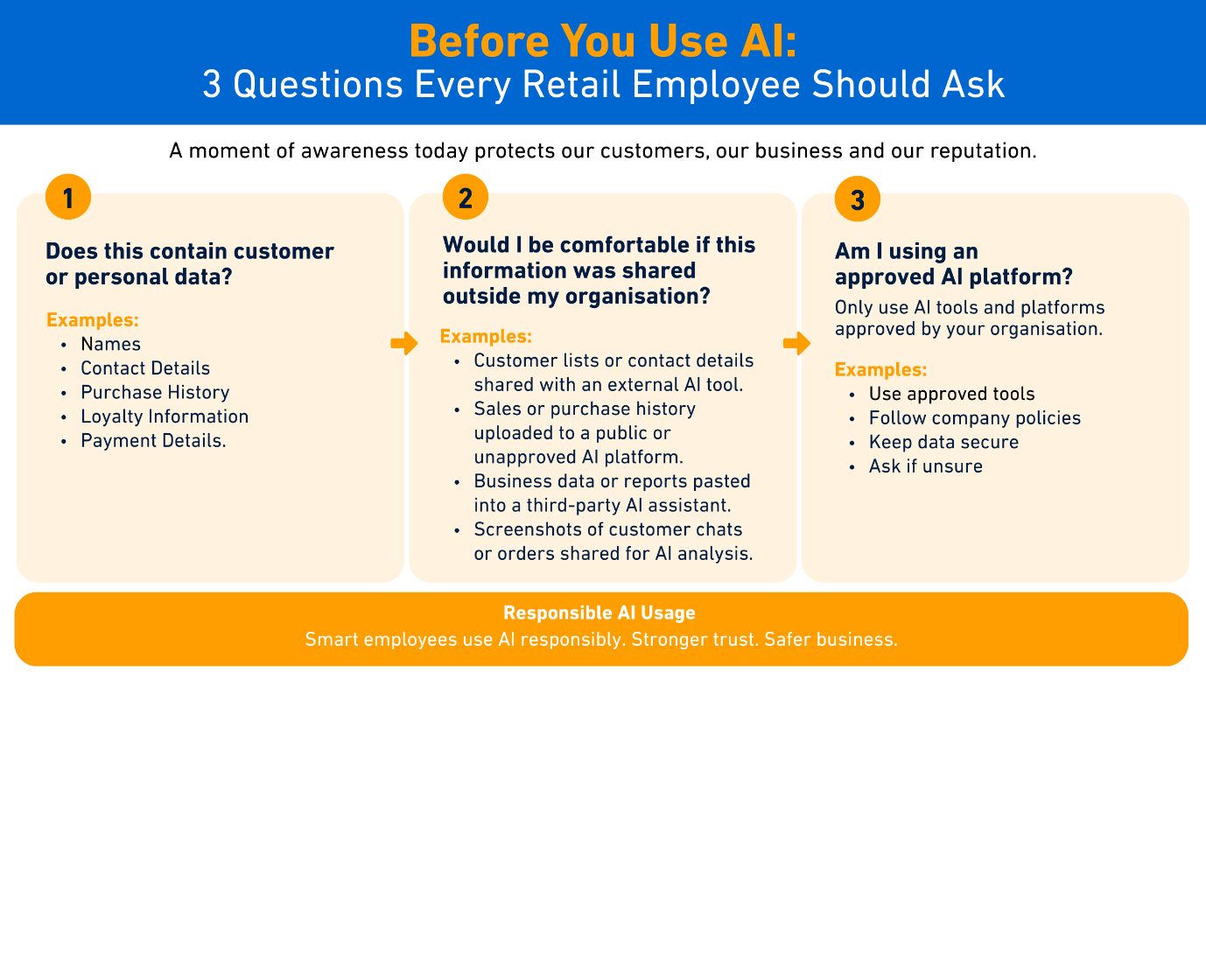
AI and Security in Retail & eCommerce: What Singapore Businesses Need to Prepare for in 2026
Retail and eCommerce businesses face increasing pressure to deliver faster, more personalised, and seamless customer experiences. Consumers today expect: Personalised recommendations, Faster customer support, Omnichannel shopping experiences, Efficient order fulfilment.
Read article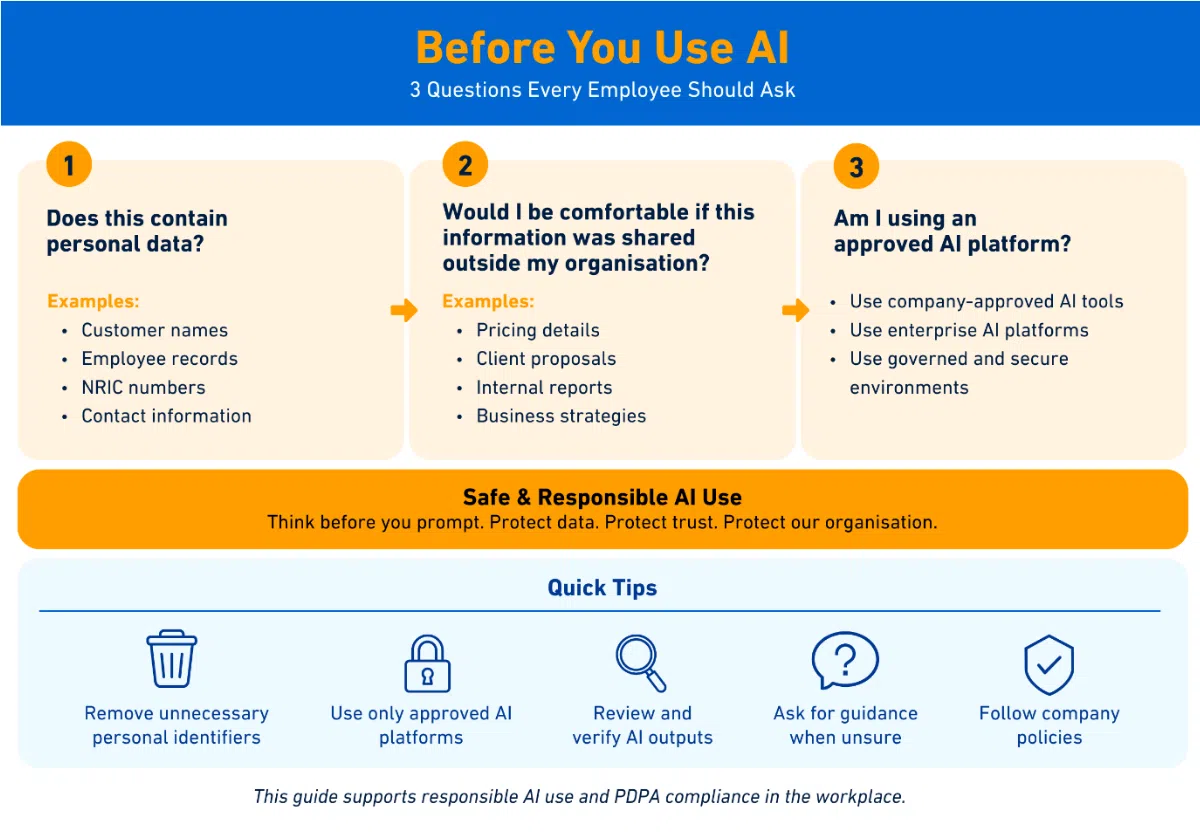
PDPA and AI in Singapore: What Every Employee Needs to Know in 2026
As AI tools become part of everyday work, organisations face growing concerns about personal data protection and responsible AI use. Learn how PDPA applies when employees use AI tools and what organisations should do to reduce risk.
Read articleAgentic AI for Smart Manufacturing: Enabling Industry 5.0
Discover how Agentic AI is shaping the next generation of Smart Manufacturing in Singapore and why workforce readiness, governance, and operational transformation matter for Industry 5.0.
Read article